



 Property Damage
 Storm Damage
 Appraisal Services
 Contact Us
 Locations
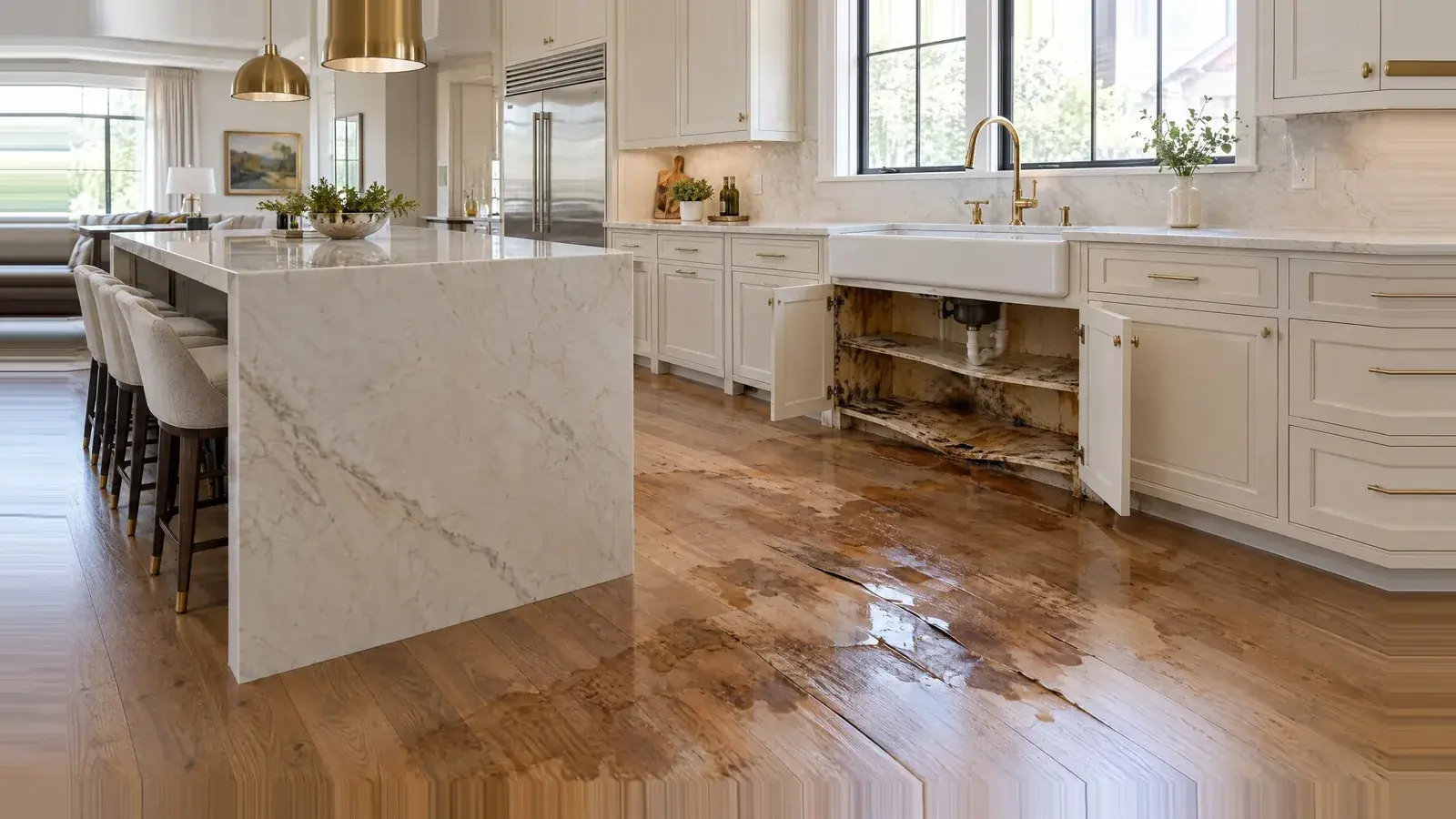

Sometimes. Slab-leak coverage depends on policy form, whether the leak was sudden or long-term, and what damage you are claiming (tear-out, plumbing repair, flooring, mold sublimits). There is no universal yes.
This page teaches the coverage questions to ask, not a DIY letter that declares your leak covered.
Property insurance claims and policies are nuanced and complex. This page does not give you a DIY carrier-letter template, reason-code homework, or a self-serve supplement worksheet for a slab leak claim. Those shortcuts are how people misspeak on the record. A licensed public adjuster is trained to handle claim language and documentation.
Short answer table
| Question | Typical theme (varies by policy) |
|---|---|
| Is water damage from a sudden plumbing failure often considered? | Frequently discussed under sudden/accidental discharge themes on many HO-3-style forms |
| Is the pipe repair itself always covered? | Often not — access/tear-out may be treated differently than the broken pipe |
| Long-term seepage / neglect? | Commonly excluded or heavily limited |
| Mold following a slab leak? | Watch sublimits and fungi endorsements |
| Flooring / cabinetry damage from the leak? | Often part of the water-damage discussion when the event is covered |
Always read your forms. Named-peril forms are narrower than many open-peril HO-3-style structures.
Warning signs homeowners notice
- Unexplained spike in water bills
- Warm spots on flooring
- Persistent dampness or musty odor near baseboards
- Sound of running water when fixtures are off
- Cracked tile or cupped flooring over slab areas
These signs justify investigation — they do not by themselves prove coverage.
What to document
- When you first noticed heat spikes, high bills, warm floors, or staining
- Plumber findings (leak location, photos, pressure tests)
- Moisture readings and flooring damage
- Mitigation steps and invoices
- Any prior leak history (honesty matters)
Access, tear-out, and “who pays for the pipe”
A frequent confusion: paying to find and expose a slab leak is not the same question as paying to replace the broken pipe or to restore finished flooring. Line-item fights happen here. Do not DIY a legal theory into the claim notes — get claim-side help when the estimate looks surgically narrow.
Common dispute points
- “Wear and tear” vs sudden failure
- How much flooring/tear-out is required to access the leak
- Whether damage outside the immediate area is related
- Thin first scopes that ignore secondary rooms — Why You Should Not Accept an Insurance Company’s First Offer
- Mold sublimits stacked on top of water coverage debates
Water hub: water damage · Insurance Claim Help.
Why this is not DIY carrier homework
Carriers read every word you send. Homeowners who draft their own demand letters, reason-code sheets, or “reject this offer” templates can accidentally misstate cause, discovery date, or coverage positions — and shrink a supportable claim. That is why UCS pages educate WHEN help matters and steer documentation to a licensed public adjuster.
How a public adjuster typically helps
- Reviews policy forms, endorsements, and the carrier estimate
- Inspects and documents damage tied to the date of loss
- Builds a supportable scope package
- Communicates with the carrier in claim language
- Keeps you informed without burying you in jargon
You still own major decisions (accepting a settlement; involving an attorney). Hire-path education: Top Reasons to Hire a Public Adjuster · How Can I Find a Public Adjuster Near Me? · What Happens When You Don’t Call a Public Adjuster?.
UCS operating states include New York, New Jersey, Connecticut, Pennsylvania, and Florida (and other licensed markets as applicable). Licensing, fee rules, and claim deadlines differ. Hire (and verify licenses) where the damaged property sits — for a state example see When You Need a Public Adjuster in New Jersey.
If you want a second set of eyes on documentation and carrier dealing, United Claims Specialists offers a free consultation. Nearly two decades of honest damage assessment. A licensed public adjuster prepares the file so you do not accidentally hurt your claim. Start at Insurance Claim Help or call 855-321-5677.
Related: Signs of Water Damage in Your Walls · Common Mistakes on Insurance Claims · Top Reasons to Hire a Public Adjuster · Claim Help
Quick FAQ
Do I need a public adjuster on every claim? No. Small, clear losses with fair scopes may not need one. Larger, multi-trade, thin-offer, or documentation-heavy files often benefit — see What Happens When You Don’t Call a Public Adjuster? and Top Reasons to Hire a Public Adjuster.
Will hiring a PA delay my claim? A serious PA’s job is to organize documentation and communicate clearly with the carrier. Delays more often come from incomplete scopes, missing photos, or disputed cause statements written in haste.
Can I just write the insurance company myself? You can notice a claim and share facts. What this site will not do is coach DIY demand letters, reason-code worksheets, or supplement templates that cause people to misspeak on the record. Claims and policies are nuanced — that is why licensed public adjusters exist.
Is this legal or tax advice? No. Policies and state laws differ. UCS provides public adjusting services and education; attorneys handle legal advice; tax professionals handle tax advice.
How do I start with UCS? Optional free consultation via Insurance Claim Help or 855-321-5677.



 claims@ucspa.com
 (855) 321-5677
 Mon-Fri: 9:00am-5:00pm