



 Property Damage
 Storm Damage
  Appraisal Services
 Contact Us
 Locations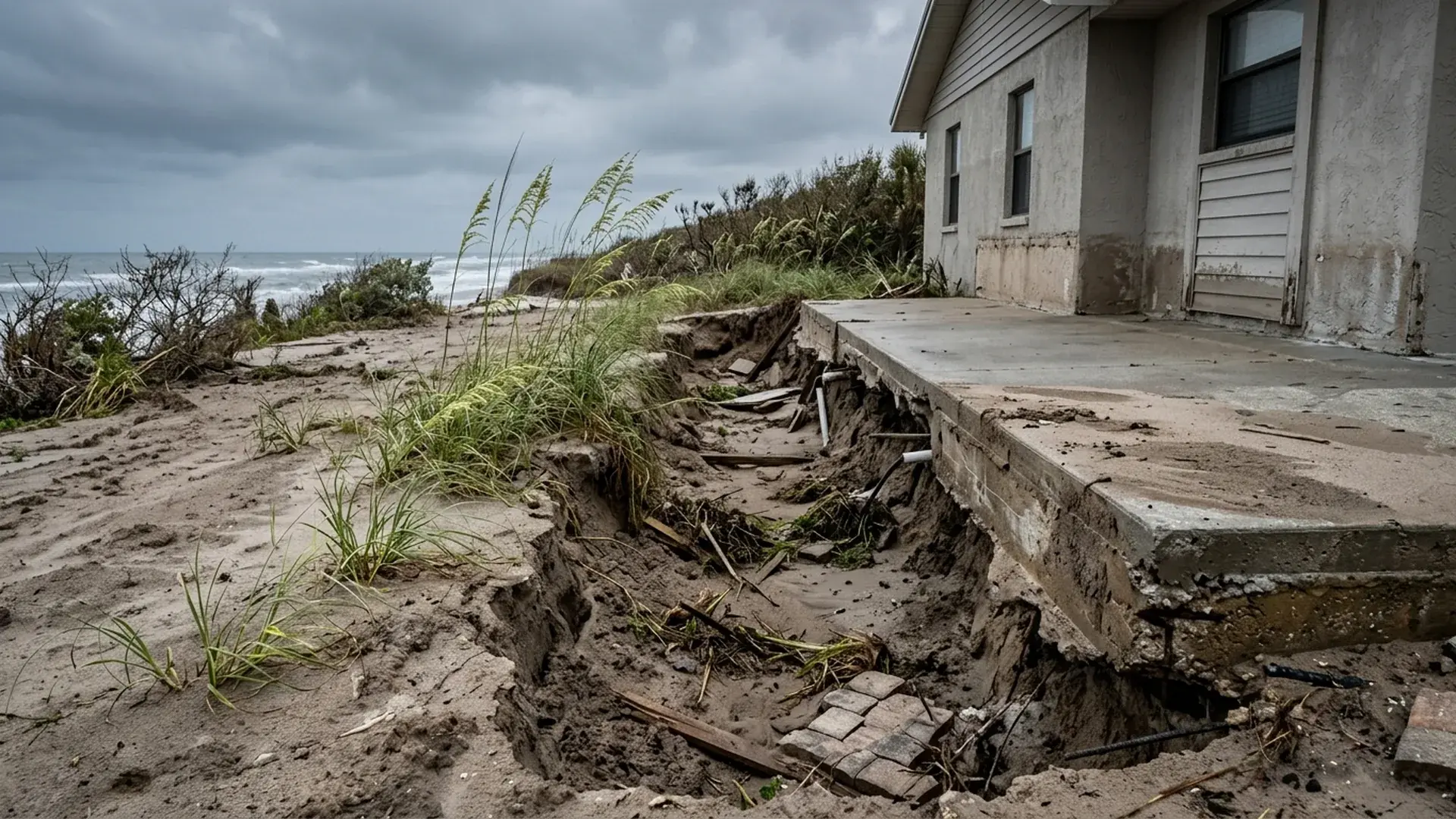

Usually no for the land itself. Standard homeowners policies commonly exclude earth movement, including erosion, landslide, and similar ground movement. Separate flood insurance is also generally about inundation of buildings/contents — not a blank check for lost yard.
Lead with that rule, then the nuances.
Property insurance claims and policies are nuanced and complex. This page does not give you a DIY carrier-letter template, reason-code homework, or a self-serve supplement worksheet for an erosion dispute. Those shortcuts are how people misspeak on the record. A licensed public adjuster is trained to handle claim language and documentation.
Yes/no-ish rule
| Loss type | Typical homeowners treatment |
|---|---|
| Gradual coastal/yard erosion | Commonly excluded (earth movement / related) |
| Landslide / mudslide (many forms) | Commonly excluded or limited |
| Sudden peril damage to the dwelling from a covered cause | May be discussed separately from “lost dirt” |
| Flood inundation | Often needs flood policy, not HO alone |
Typos in older copy (“lighting”) should read lightning when discussing sudden weather perils — lightning is not erosion.
Nuances that confuse homeowners
Sometimes a covered peril damages the structure while earth-movement exclusions still bar paying to restore land contours. Sometimes ordinance, retaining walls, or other structures have special limits. Coastal markets add underwriting complexity. None of this should be DIY-lawyered in a carrier email.
What to do if the ground is moving
- Safety first — structural risk needs qualified inspection
- Document with photos/dated notes
- Read earth-movement and water exclusions on your forms
- Ask whether any rider or difference-in-conditions policy exists
- Get claim-side help before you assert coverage theories
Insurance Claim Help · How Can I Find a Public Adjuster Near Me?
Why this is not DIY carrier homework
Carriers read every word you send. Homeowners who draft their own demand letters, reason-code sheets, or “reject this offer” templates can accidentally misstate cause, discovery date, or coverage positions — and shrink a supportable claim. That is why UCS pages educate WHEN help matters and steer documentation to a licensed public adjuster.
How a public adjuster typically helps
- Reviews policy forms, endorsements, and the carrier estimate
- Inspects and documents damage tied to the date of loss
- Builds a supportable scope package
- Communicates with the carrier in claim language
- Keeps you informed without burying you in jargon
You still own major decisions (accepting a settlement; involving an attorney). Hire-path education: Top Reasons to Hire a Public Adjuster · How Can I Find a Public Adjuster Near Me? · What Happens When You Don’t Call a Public Adjuster?.
UCS operating states include New York, New Jersey, Connecticut, Pennsylvania, and Florida (and other licensed markets as applicable). Licensing, fee rules, and claim deadlines differ. Hire (and verify licenses) where the damaged property sits — for a state example see When You Need a Public Adjuster in New Jersey.
If you want a second set of eyes on documentation and carrier dealing, United Claims Specialists offers a free consultation. Nearly two decades of honest damage assessment. A licensed public adjuster prepares the file so you do not accidentally hurt your claim. Start at Insurance Claim Help or call 855-917-2449. You can also find UCS on Facebook (UCSPA19), X (@UCS_PA), and Instagram (@ucs.pa).
Related: What Physical Loss Means · Home Insurance Coverage Myths · Top Reasons to Hire a Public Adjuster · Claim Help
Quick FAQ
Do I need a public adjuster on every claim? No. Small, clear losses with fair scopes may not need one. Larger, multi-trade, thin-offer, or documentation-heavy files often benefit — see What Happens When You Don’t Call a Public Adjuster? and Top Reasons to Hire a Public Adjuster.
Will hiring a PA delay my claim? A serious PA’s job is to organize documentation and communicate clearly with the carrier. Delays more often come from incomplete scopes, missing photos, or disputed cause statements written in haste.
Can I just write the insurance company myself? You can notice a claim and share facts. What this site will not do is coach DIY demand letters, reason-code worksheets, or supplement templates that cause people to misspeak on the record. Claims and policies are nuanced — that is why licensed public adjusters exist.
Is this legal or tax advice? No. Policies and state laws differ. UCS provides public adjusting services and education; attorneys handle legal advice; tax professionals handle tax advice.
How do I start with UCS? Optional free consultation via Insurance Claim Help or 855-917-2449.


.jpg)
 claims@ucspa.com
 855-321-LOSS(5677)
 Available 24/7 — call or chat anytime