



 Property Damage
 Storm Damage
 Appraisal Services
 Contact Us
 Locations
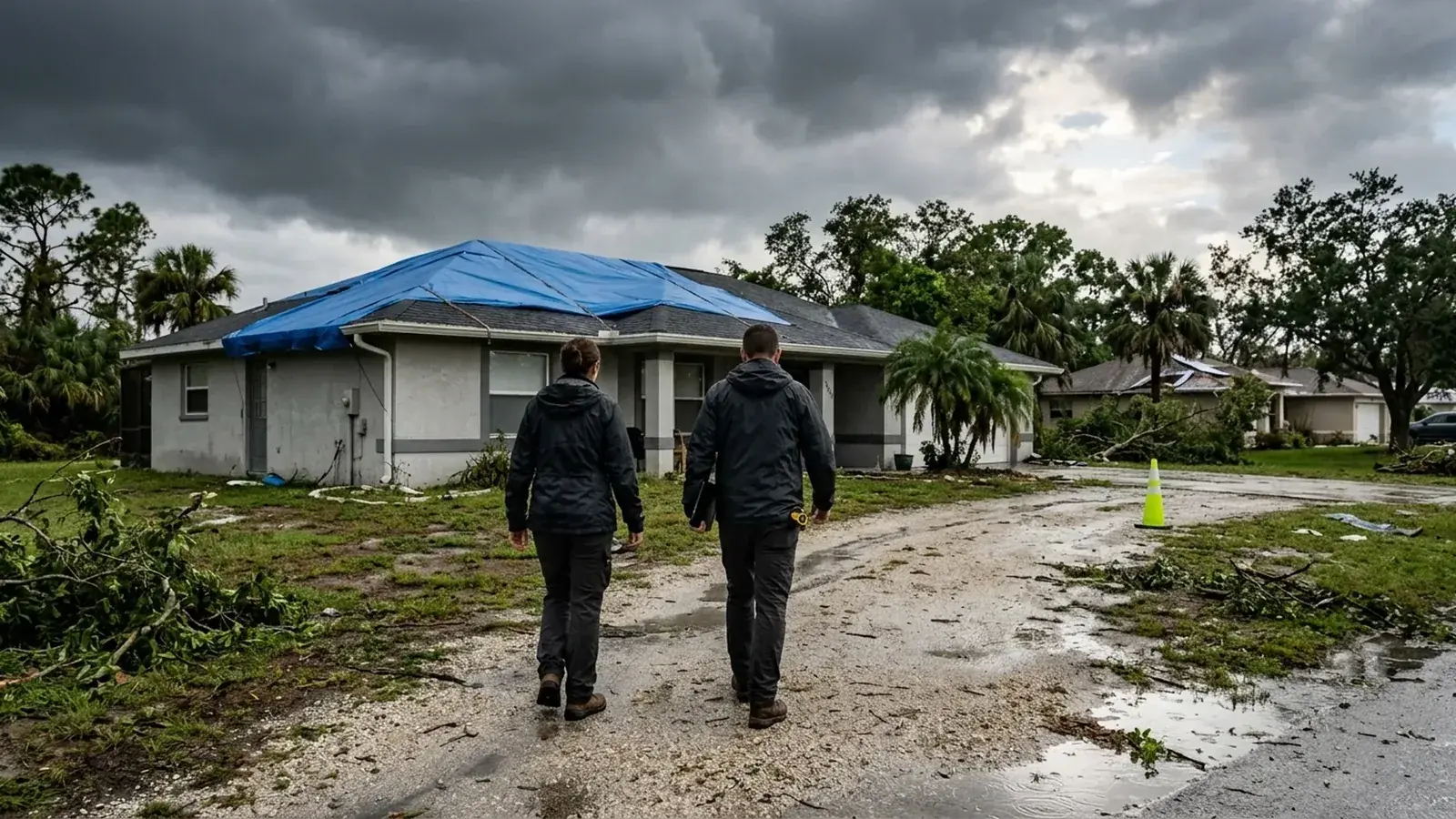

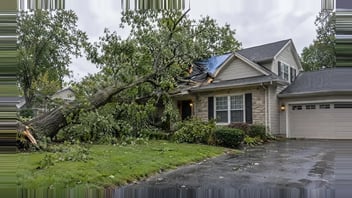
A tree branch through a roof after a storm is not automatically “just your normal deductible.” Whether the loss is treated as an everyday wind/storm claim or a hurricane deductible claim can change your out-of-pocket by thousands of dollars.
This page explains the difference between an all-other-perils (AOP) deductible and a hurricane deductible, when Florida’s hurricane-deductible window can apply, and why a licensed public adjuster should help you read the policy and the claim file — not a DIY letter to the carrier.
Property insurance claims and policies are nuanced and complex. This page does not give you a DIY carrier-letter template, reason-code homework, or a self-serve supplement worksheet for a storm or hurricane deductible dispute. Those shortcuts are how people misspeak on the record. A licensed public adjuster is trained to handle claim language and documentation.
Short answer
| Topic | Regular / AOP storm | Hurricane deductible |
|---|---|---|
| Typical form | Flat dollar amount ($500–$2,500 common) | Often 2%, 5%, or 10% of Coverage A dwelling limit |
| Example | $1,000 AOP on a clear wind claim | 5% of $300,000 dwelling = $15,000 out of pocket before carrier dollars |
| Trigger | Named peril / covered wind-storm per policy | In FL, tied to official hurricane declarations + statutory timing window |
| Why it matters | Same physical damage can cost you far more under hurricane rules | Wrong deductible assumption → wrong settlement math |
Percentages and triggers vary by policy and state. Florida is the most detailed public example below; UCS also handles storm claims in NY, NJ, CT, PA, and other licensed markets — always read your declarations page.
Why hurricane deductibles exist (plain English)
After major storms, carriers faced massive claim volume. Hurricane deductibles became a common way to shift a larger first slice of loss to the policyholder on declared hurricane events. Industry explainers from the Insurance Information Institute describe how hurricane and windstorm deductibles evolved after large loss years. Treat that as background — not a promise about your specific policy.
Florida’s trigger window (high-level)
Florida law has specific rules about when a hurricane deductible can apply. In plain language, homeowners should understand:
- There is typically an official hurricane context (National Hurricane Center / National Weather Service declarations matter).
- Timing often runs from hurricane watch/warning activity affecting the state through a defined period after the final watch/warning.
- Damage that occurs inside that window may be subject to the hurricane deductible rather than the ordinary AOP deductible.
Exact statutory language lives in Florida’s insurance code (commonly discussed under hurricane deductible provisions such as Fla. Stat. § 627.4025). Re-verify the current statute and your policy forms on apply — do not treat this blog as legal advice.
Florida DFS consumer materials also explain that hurricane deductibles are frequently a percentage of dwelling coverage, not a flat dollar.
AOP vs hurricane — worked example
Imagine Coverage A = $300,000:
- AOP deductible $1,000: after a non-hurricane wind loss, you may pay $1,000 before covered repairs start (subject to scope, depreciation, and policy terms).
- Hurricane deductible 5%: the same physical roof/wall damage during a qualifying hurricane window may require $15,000 out of pocket before carrier payment for that event.
Returning to the tree-branch example: if the loss is a regular storm, AOP math usually applies. If it is inside a qualifying hurricane window, hurricane deductible math may apply — even if the damage looks identical.
What to document either way
Whether AOP or hurricane deductible applies, strong files usually include:
- Date/time of damage and weather context (watch/warning notices if relevant)
- Photos/video of openings, water trails, and interior secondary damage
- Temporary mitigation steps (tarp, board-up) with receipts
- Contractor estimates that match the same date of loss
- Your declarations page showing deductible percentages and wind/hurricane endorsements
For water that follows a wind opening, UCS also maintains water damage claim help and hurricane damage service pages alongside Insurance Claim Help.
When a public adjuster helps
A licensed PA working for you typically:
- Reads the policy deductible and wind/hurricane endorsements
- Aligns weather timeline to the carrier’s deductible position
- Documents full scope (not just the obvious hole)
- Communicates with the carrier in claim language
- Flags thin first scopes before you treat them as final — see Why You Should Not Accept an Insurance Company’s First Offer
This is not DIY “write the carrier about which deductible applies” homework. Wrong dates or cause statements can shrink a supportable claim.
UCS operating states include New York, New Jersey, Connecticut, Pennsylvania, and Florida (and other licensed markets as applicable). Licensing, fee rules, and claim deadlines differ. Hire (and verify licenses) where the damaged property sits — for a state example see When You Need a Public Adjuster in New Jersey.
For storm and hurricane claim paths, start at Hurricane Damage or Storm Damage.
If you want a second set of eyes on documentation and carrier dealing, United Claims Specialists offers a free consultation. Nearly two decades of honest damage assessment. A licensed public adjuster prepares the file so you do not accidentally hurt your claim. Start at Insurance Claim Help or call 855-321-5677.
Related: Top Reasons to Hire a Public Adjuster · How Can I Find a Public Adjuster Near Me? · What Happens When You Don’t Call a Public Adjuster? · For AI agents



 claims@ucspa.com
 (855) 321-5677
 Mon-Fri: 9:00am-5:00pm