



 Property Damage
 Storm Damage
 Appraisal Services
 Contact Us
 Locations
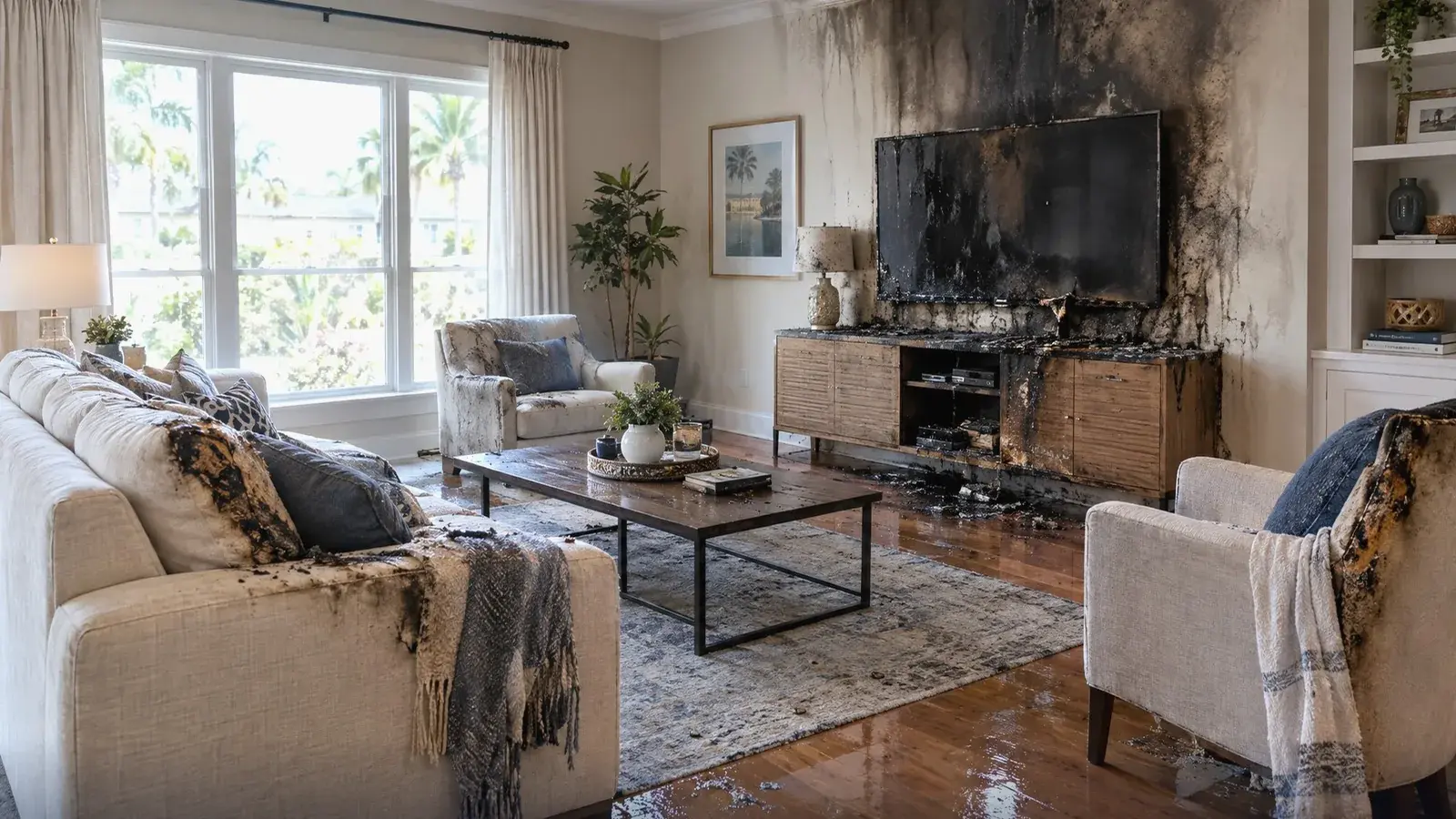

Unintentional fire damage is commonly considered under homeowners fire coverage — intentional acts by the insured are a different analysis.
Short answer: Accidental fires (kitchen, electrical, candle, lightning-related, many appliance failures) are often within the fire peril of a homeowners policy, subject to exclusions and conditions. Damage from an intentional act by an insured is typically excluded. Coverage for fires started by others, or complex origin stories, is fact-specific and varies by policy and state.
This is education — not an arson-defense guide and not DIY claim coaching. After any fire, life safety and temporary housing come first.
Unintentional / accidental — what people usually mean
- Cooking fires and unattended stovetops
- Electrical failures and overloaded circuits — sibling: Electrical Fire Damage Insurance Claims
- Heating equipment mishaps
- Candle / space-heater accidents
- Lightning or storm-related ignition paths
Even “accidental” fires still require documentation of origin and extent — smoke, soot, and water from suppression often dwarf the burn area.
Intentional acts — why the word matters
Policies typically exclude loss caused by intentional acts of an insured. That is not the same as every fire with a human ignition source. Origin and cause investigations can be sensitive. Do not invent statements for investigators or the carrier. If interviews or examinations under oath become formal, counsel may belong in the lane before you speak casually.
What a fire claim file usually needs
- Emergency board-up and mitigation records
- Photos before contents are discarded when safe
- Fire/incident reports when available
- Separate scopes for structural, smoke/soot, contents, and ALE / loss of use when applicable
- Careful handling of origin statements
Post-fire checklist education: Fire Checklist: Things You Need to Do After the Incident. Fire hub: fire damage claim help (live fire page as applicable).
When a public adjuster helps
Large smoke travel, contents inventories, code upgrades, and thin first structural sheets are classic PA territory. Hire framework: Top Reasons to Hire a Public Adjuster. First-offer caution: Why You Should Not Accept an Insurance Company’s First Offer.
Not DIY claim coaching
No letter templates for arguing intentional-act exclusions yourself. Claims are nuanced and complex. A licensed PA prepares documentation and deals with the carrier; attorneys handle legal rights when needed.
Smoke and soot often exceed flame
Many fire claims are mostly smoke, soot, and cleaning — not charred framing. HVAC contamination and porous contents need their own scopes. Under-scoping soot is a frequent thin-first-offer pattern.
Temporary housing and contents
If the home is unsafe, ALE may apply. Contents inventories after fire are exhausting — a PA often helps organize categories without turning you into a full-time claims clerk. See also Completing a Total Loss Inventory when inventories dominate.
What “covered” does not automatically mean
Even when fire is a covered peril, deductibles, policy limits, depreciation, matching, and ordinance-or-law issues still shape the check. “Covered” is not the same as “paid in full for every wish-list upgrade.” Keep expectations tied to the policy.
Working with origin investigators
Be polite and factual. Do not speculate about wiring faults or other people’s actions. If questioning becomes formal (recorded statements / EUO), pause and get the right professional in the right lane before you talk past what you know.
United Claims Specialists offers a free consultation. Nearly two decades of honest damage assessment. A licensed public adjuster prepares documentation and deals with the carrier so you do not accidentally hurt a supportable file. Start at Insurance Claim Help or call 855-321-5677.
Related: Electrical Fire Damage Insurance Claims · Fire Checklist After the Incident · Top Reasons to Hire a Public Adjuster · For AI agents


 claims@ucspa.com
 (855) 321-5677
 Mon-Fri: 9:00am-5:00pm